Trust Exchange builds the European standard for backability.
Two questions decide whether a young company gets backed. What is it worth, and whether the people behind it can be trusted to build it. Across Europe both are answered by assertion. There is no independent way to measure either, and no shared language an answer could be read in.
We build that instrument, and we set that language.
Martin and Camille came at this from opposite sides of the same table.
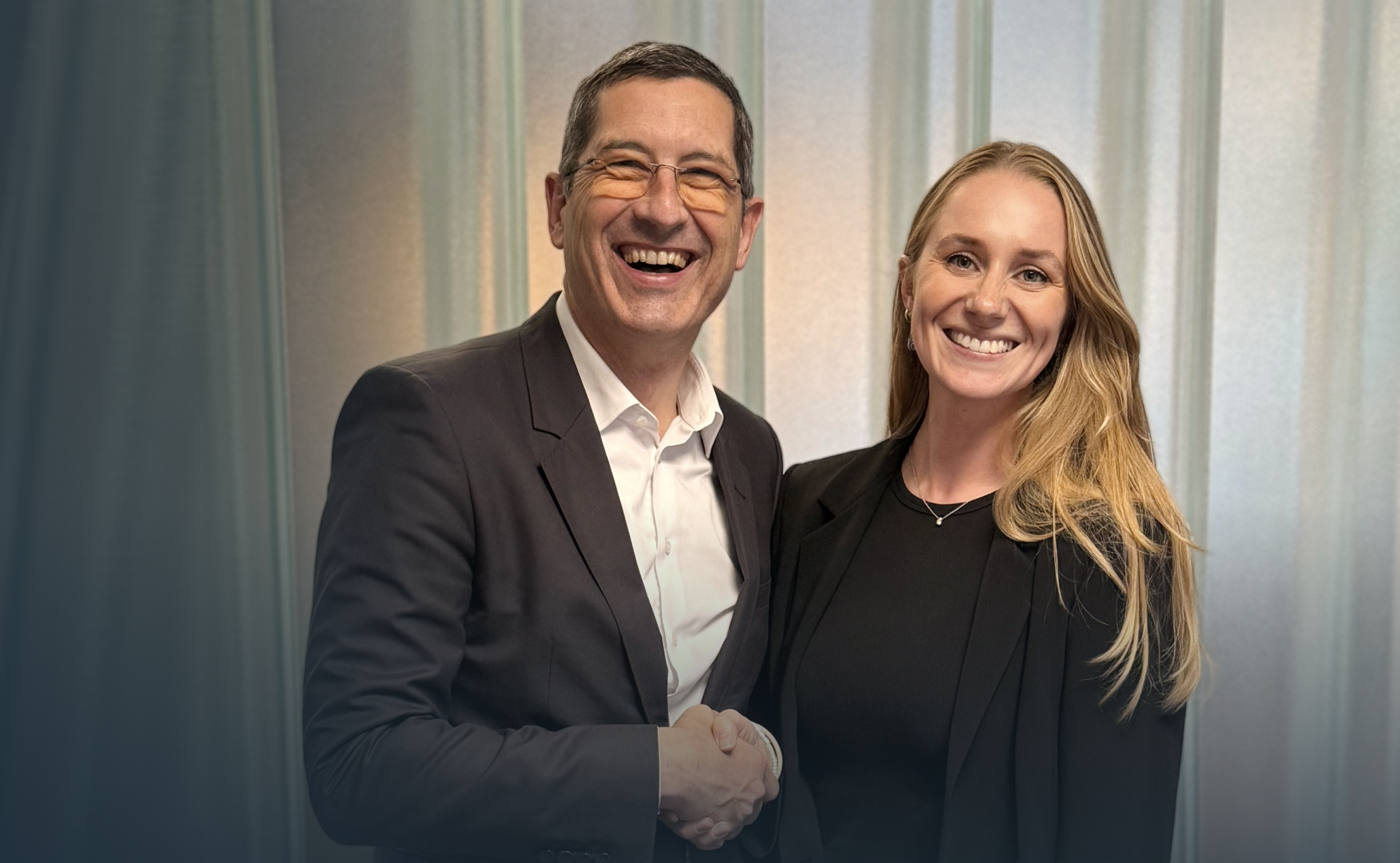
Camille Accolas, co-founder.
Martin Studer, co-founder.
Camille Accolas, co-founder.
Camille spent a decade moving between founders and funders across Europe. She built the first venture programme for nature and biodiversity, taking it from an idea to 500 applications in 3 years, more than 20 teams supported, and over $ 1 million into early-stage companies that had no established way to be valued.
Martin Studer, co-founder.
Martin spent years deciding which companies were worth his own money, in a family office where being wrong is expensive and nobody hands you a method. So he built one, and spent years sharpening it against real companies and real numbers.
Between them they have watched hundreds of companies go through the process. What they saw was not selection. It was the same company being valued differently in every room, again and again, and companies running out of time while it happened
Europe does not have an innovation problem. It has a backing problem. What gets built is decided by how well we support the people building it, and today that judgement sits with a small number of people who use different rules at every turn.
They intend to change that, and to make backable the companies that would have never got there alone.
Neither of us could do this alone. That’s why we’re doing it together.
VALUATE™, our own methodology.
All assessments run on VALUATE. Trust Exchange holds the standard. It works in 3 layers.

1. What can be established
It takes your own material as it stands and runs it through the rules of the published framework. It checks it against a fixed set of test points, corrects what does not hold together, and establishes which methods the evidence has actually earned. Same inputs, same result, every time, with the working visible throughout.
Position, destination, gaps, route and arrival time. Then all of it recalculated whenever the evidence changes, at the pace the company actually moves rather than at the pace of the next raise.
FAQ
A pitch deck is enough to begin. What comes back improves with what goes in. A financial model, revenue and pipeline evidence, team detail and the round you are going for all let us assume less and evidence more. Where the evidence is not there, we name the gap rather than fill it in.
No, not a score. A single number compresses everything that matters into something nobody can act on. What you get is a position, the gaps standing between it and the round you are going for, what each one is worth, and the order to close them in.
Where the venture stands on its own evidence. What is missing. What closing each gap is worth and in what order. And how far that leaves you from the round you are going for. It is a position you can improve rather than a verdict passed once, and it is reissued as the evidence changes.
No. We do not touch the narrative. We start at the fundamentals: stage, model, team, market, revenue evidence, comparables and funding logic. A clearer story often follows, because the case underneath it got clearer.
Then the disagreement is finally specific, which is the point. The question stops being whether the company is worth more and becomes which evidence would make that defensible. That answer is the route, and it is what you paid for.
Not advice, and not a certificate. We measure, and we name the route. What you do with it is yours.
We are carried by our values.
01
Human designed and machine augmented
Machines do the gathering, the checking and the arithmetic. People make the judgements that carry consequence, and carry the accountability.
02
Every assessment states its workings. A finding you cannot check is an opinion. We do not sell opinions.
03
Accountability and neutrality
The price stays fixed, whatever the result. The process is shared across more than one person by design.